


Key
What is Key
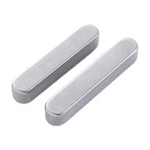
Parallel keys have a straightforward design, making them relatively easy to install. They consist of a rectangular bar with a variety of shaped ends that fit into matching keyways on both the shaft and the machine element and tie the two elements together. Effective torque transmission.
Advantages of Key
Simple design and installation
Parallel keys have a straightforward design, making them relatively easy to install. They consist of a rectangular bar with a variety of shaped ends that fit into matching keyways on both the shaft and the machine element and tie the two elements together.
Effective torque transmission
Parallel keys provide a safe, reliable, and efficient method of transmitting torque between components, ensuring minimal power loss and efficient energy transfer.
Uniform load distribution
The design of parallel keys allows for an even distribution of forces along their length, preventing localized stress concentration. This results in improved durability and reduced risk of component failure.
Accurate positioning
Parallel keys ensure precise alignment between the shaft and the machine component, which is crucial for maintaining proper functionality and reducing wear and tear.
Low Price
Parallel keys are cost-effective to manufacture and replace, making them low-price, practical components for various applications.
Ease of maintenance
Replacing parallel keys is relatively simple and can be accomplished without the need for specialized tools or equipment. This contributes to overall ease of maintenance and reduces downtime.
Compatibility
Parallel keys can be used with a wide range of shaft and machine element configurations, making them versatile and adaptable.


Why Choose us
Reputation
A company with a positive reputation is more likely to attract customers. Reputation is built through consistent quality service or products, good customer relations, and reliability.
01
Customer service
The company offers excellent customer service and support, making it easy for customers to resolve any issues they may have with the product.
02
Quality assurance
We prioritize delivering high-quality services, and our output is subjected to quality checks to ensure that our clients receive the best possible services.
03
Competitive pricing
We offer competitive pricing on all our products without compromising on quality.
04
Innovative and unique products
We are always creating innovative and unique products to keep our customers interested and engaged.
05
Types of Key
Parallel keys are otherwise called the straight keys and they are made of square and rectangular styles. These are the most used keys. As a general rule, the shaft has a slot that runs it full length which is to hold the key or alternatively, a slot that’ s longer than the key which starts at the end of the shaft. During installation, the key slots on the shaft and component are aligned, and then the parallel key is pressed in.While shaft keys come in several styles and types, the parallel keys remain the most used and common.The rectangular keys are sometimes called the flat keys and are all-purpose components. The shafts are around 1.0 to 20in diameter. Its width is made to exceed the height so it is able to transmit more torque but does not add slot depth to the shaft and does not add keyway depth to the component key. These shafts are more than 11 inches diameters and use rectangular keys, they are mostly milled flat over their length, rather than working with as a key slot. The assembled component makes use of a standard broached-keyway. Parallel keys are cheaper than others, they’ re readily available and are easy to install. The key slot on the shaft may be cut using an end mill or with a circular saw. After installation, a screw or any other retainer accessory must be used to retain the parallel key in the position upon its mounted component. A drive in the reverse direction or a vibrating drive often causes the screw to loosen. When this happens, the parallel keys are likely to move out of the assembly.
The saddle keys are keys that are usually connected to the drive element (for example, shafts). These keys are known to have less strength than for instance, sunk keys. These keys are used to transmit less energy to the driven elements, through the couplings.
The high torque and heavy duty machines use the Tangent keys. The keyway resembles that of a parallel key, except that it tangentially extends from the outer shaft into the inner shaft. What would have been the side of each keyway is the heel against which the key is located and transmits the compressive force. This last point indicates that for a reversible motion of the shaft, another key is needed along with a tangent outward in the opposite direction. Generally, this is compensated by 90 °or 180 °on the shaft. The key may be wedge-shaped, square or even rectangular, but in particular the rectangular and double taper keys are mostly used.
The Woodruff keys are usually semicircular and are partially fitted into round segment keyways, the remainder is fitted to a longitudinal slot mating part. Without any reliefs, the circular segment may be cut directly with a plunge cutting using a circular woodruff cutter. The primary advantage of the Woodruff key is that there is no need for milling near the edges of the shaft, where there would be a compromise in the concentration of the tension, so no concentricity would be compromised.The latter is majorly necessary for the high-speed operations. The tighter fit of the key and keyway reduces the space and tension concentration and improves the keys reliability. A further advantage is that when there is a stuck key, it can be removed from the shaft by a hammer blow. The circular profile pushes the key out from the slot, unlike a standard key that must be pushed axially or removed from the slot. The common applications of this are in machine tools, snow blowers, automotive applications, etc.
Machine Key Design Considerations

Shape / Type
Shaft keys are available in many different styles, and each one offers different benefits to accommodate a range of applications. Consider the impact of shape within your application’s keyway.

Location
Depending on the application, keyways are located at the end or along the length of the shaft. Location can impact key design and ultimately its performance.

Corner designs
Sharp, square corners provide the most surface contact while radiused or chamfered corners are a little easier to install and fully seat in a keyway. Think about the desired ease of installation vs. the benefits of surface contact.
Material and finish
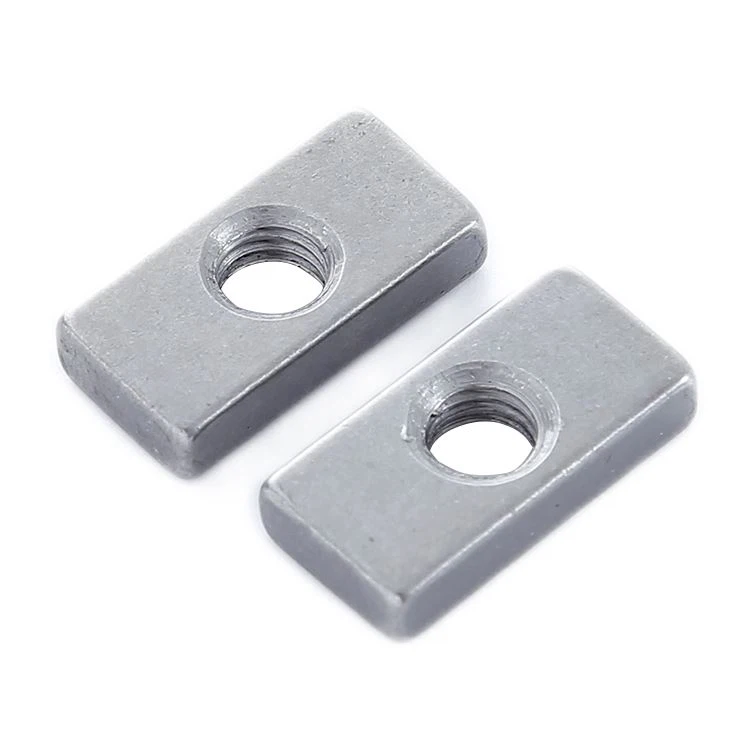
Different materials and finishes will affect the shaft key’s overall performance by offering varying levels of strength, machinability, corrosion resistance, etc. Think about the environmental elements your shaft key will endure and how its metal properties will either contribute to or detract from your application.
Application Of Mechanical Keys
Sunk Key - Used for heavy-duty application.
Rectangular sunk key - For preventing rotation of gears and pulleys on the shaft.
Gib headed key - Used where the key to be removed frequently.
feather key - Machine tool.
Saddle key - For light-duty or low power transmission.
Round key - Used for low Power drive.
Splines - Where providing axial movement between the shaft and mounted member.
Mechanical parallel key material
|
Material |
Brinell Hardness |
Ultimate |
Notes |
|
Carbon Steel |
225 - 275 |
500 |
Provides good strength and can be altered through heat treatment to provide a higher degree of strength or wear resistance |
|
High Carbon Steel |
|||
|
Alloy Steel |
300-350 |
600 |
|
|
Hardened Steel |
650 |
650 |
|
|
Martensitic stainless-steel |
197 |
655 |
Use when higher material strenngth is required in mild corrosive environments |
|
Austenitic stainless steel |
212 |
240-250 |
Use on highly corrosive environment applications |
|
Aluminium alloy |
30 |
120-130 |
|
|
Brass (C36000) |
60-80 |
280-320 |
|
|
Copper |
80-110 |
200 - 360 |
Determine the shaft size and keyway dimensions
Measure the shaft diameter and keyway slot width and depth to ensure the key fits snugly.
Calculate the torque and load requirements
Determine the maximum torque and load capacity of the shaft and key to ensure it can handle the required force.
Select the appropriate key material
The key material must be strong enough to withstand the forces it will experience and be compatible with the shaft and hub materials.
Choose the key type
The most common types of keys are square, rectangular, tapered, and woodruff.
Consider the key length
The length of the key should be long enough to engage both the shaft and the hub.
Verify the fit
Make sure the key fits snugly in the keyway slot without any wiggle or looseness.
Check for compatibility
Ensure that the key is compatible with both the shaft and hub materials to avoid corrosion or other issues.
Our factory
Wenzhou Xionglian Hardware Machinery Co., Ltd. is a member of China Machinery General Parts Industry Association. The company was founded in 1988, is a modern manufacturer integrating production, R&D, manufacturing and sales. The company focuses on the production of fasteners, stamping parts and special kinds of fasteners. Our products are widely used in machinery, automobile, military, aerospace, metallurgy, mining, industrial automation and others.


Our Certificate


Asked Question
Q: What is the importance of parallel key?
Q: What are the different types of parallel keys?
Q: What is the difference between feather key and parallel key?
Q: What are the changes between parallel keys?
Q: What is a parallel key also known as?
Q: Which keys are also termed as plain parallel keys?
Q: What is an indented and parallel key?
Q: What is a sunk key?
Q: What is the maximum torque of a keyway?
Q: What is a Woodruff key for?
Q: Does a key transmit torque?
Q: What do parallel keys share?
Q: What is a feather key?
Q: Are parallel keys closely related keys?
Q: What is the difference between relative and parallel key signatures?
Q: How do you calculate the dimensions of a parallel sunk key?
Q: What is hollow saddle key?
Q: What are the failure of keys in machine design?
Q: What are keys in mechanical engineering?
Q: What is bracketed key?