


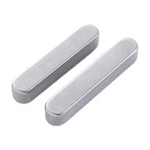
Washers and Retaining Rings

What is Washers and Retaining Rings
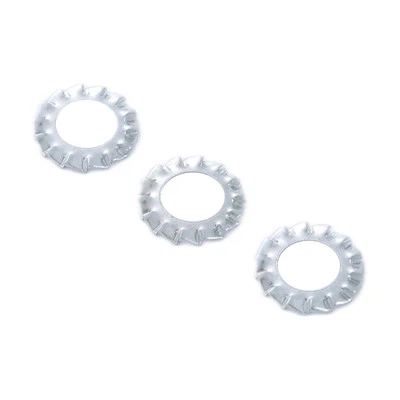
A washer is a thin plate with a hole that is normally used to distribute the load of a threaded fastener, such as a bolt or nut. Other uses are as a spacer, spring, wear pad, preload indicating device, locking device, and to reduce vibration. Washers are usually metal or plastic.
Advantages of Washers and Retaining Rings
Secure fastening
They are used to secure components on a shaft or in a bore, preventing axial movement.
Space-efficient
Retaining rings are compact and take up minimal space, making them suitable for applications with tight clearances.
Cost-effective
They are relatively inexpensive and easy to install, reducing assembly costs.
Reusable
Many retaining rings are reusable, which can save on maintenance and replacement costs.




Why Choose us
Reputation
A company with a positive reputation is more likely to attract customers. Reputation is built through consistent quality service or products, good customer relations, and reliability.
01
Customer service
The company offers excellent customer service and support, making it easy for customers to resolve any issues they may have with the product.
02
Quality assurance
We prioritize delivering high-quality services, and our output is subjected to quality checks to ensure that our clients receive the best possible services.
03
Competitive pricing
We offer competitive pricing on all our products without compromising on quality.
04
Innovative and unique products
We are always creating innovative and unique products to keep our customers interested and engaged.
05
The Purpose of Washers and Why They' re Used With Fasteners
The primary purpose of most washers is to evenly distribute the load of the threaded fastener with which they are used. Threaded fasteners stress the material in which they are driven. Driving a screw into wood, for example, may cause the wood to crack around the surface. Washers reduce the risk of such damage by evenly distributing the fastener's load across the surface of the material. Not all materials require the use of washers. But for wood and other relatively soft materials, washers are useful to protect against stress-related damage when the threaded fastener is driven into the material.
Washers can also be used as spacers. Why would you even need a spacer when driving a threaded fastener into an object? If the threaded fastener is longer than the depth of the object, you won't be able to drive it all the way into the object — not without having some of the fastener stick out the back of the object, at least. Driving a 4-inch screw into an object that's 3 inches deep will result in 1 inch of the screw's tip protruding out of the back of the object. A simple solution to this problem is to use washers. Placing washers through the threaded fastener before driving it into the object creates padding so that the fastener doesn't go too deep.
Certain types of washers are designed to absorb vibrations. Known as vibration damping or vibration isolating washers, they usually aren't made of metal. Instead, they are made of a softer material like plastic, rubber or urethane. Softer materials such as these are more effective at absorbing vibrations than hard materials, including metal. If a threaded fastener is being used to connect two objects, and one of those objects producing vibrates aggressively, using vibration damping washers can protect the other object from damage.
Other types of washers prevent the ingress of water and liquids. They are often used in water pipes and connections to create a waterproof seal. Like vibration damping washers, liquid-sealing washers are made of a soft material that's able to press completely against the surface of the object.
Retaining Ring Installation and Features

Radially installed retaining ring
A ring installed by clipping it over the outside of a shaft. This category includes E-clips, snap rings, and poodle clips.

Axially installed retaining ring
A ring installed along the axis of a shaft or housing. This category includes housing rings, snap rings, and spiral rings.

Constant section retaining ring
A ring in which the section is the same around its circumference. This category includes round wire rings and square wire rings, among others.

Lug
A lug is the widened section of an axially installed retaining ring, usually featuring holes or notches for tool attachment. Lugs allow a tool to compress or expand the ring during installation.

Free end
Many retaining rings feature a gap to allow for expansion or compression. The parts of the ring’ s circumference surrounding the gap are called free ends.

Tapered retaining ring
A ring with a section of varying depth. This category includes snap rings and housing rings.
Thrust load capacity - Thrust loads act along the axis of a housing or shaft. They are the forces a retaining ring absorbs to keep the retained part in place. Both rings and grooves have a maximum thrust load capacity that depends on the materials used, size, and other factors.
Housing diameter - The diameter of the housing containing the retained part.
Side clearance - The gap between the retained part and the wall of the housing.
Edge margin - The distance between the end of a shaft or housing and the groove into which the ring is fitted.
Free diameter - The diameter of a retaining ring before it has been installed.
Radius or chamfer - A curve or transitional edge at the interface between two edges. For example, retaining ring grooves may have a small radius where the bottom and the wall of the groove meet. Retained parts may have a radius or chamfer where they contact the retaining ring.
Groove depth - The height of the groove's wall.
Groove diameter - The distance between the bottom of the groove on opposing sides of the shaft or housing, not to be confused with groove depth.
Thickness - The width of the ring measured from front to back. The ring's thickness determines the appropriate groove width.
Section or radial depth - The width of the retaining ring from the inner to the outer diameter. The radial depth is constant in constant section retaining rings and varies around the ring's circumference in tapered retaining rings.
Accumulated tolerances - All machine parts are built to a specific tolerance or degree of precision. They may be slightly oversized or undersized. These slight differences from nominal size combine when parts are joined together, resulting in accumulated tolerances.
Factors to Consider When Sourcing a Retaining Rings
Retaining ring size - Retaining rings vary across multiple dimensions, but when choosing a retaining ring the most important measurements to consider are:
● Free diameter – For internal retaining rings, this is the outer diameter and for external retaining rings, it is the inner diameter.
● Ring thickness.
● Groove size, including the diameter, width, and depth of the groove.
Rotational capacity - When fitted to rotating shafts, retaining rings experience centrifugal forces. Excessive rotational speed can cause the ring to lose contact with the bottom of the groove, impacting its performance. External rings are designed to grip the groove's bottom – the ring's internal diameter is slightly smaller than the groove diameter – but this is only effective below a specific rotational speed provided in the ring's specifications. For example, the 1-3/8 external snap ring has an RPM limit of 16,000.
Preferred installation method - A retaining ring's design affects how easy it is to install and remove. Internal snap rings and external snap rings with lugs are straightforward to install with snap ring pliers. Snap rings without lugs are more difficult and time-consuming to install and may require the use of a mandrel or cone. Spiral rings are also more time-consuming to fit, although they can be “ wound ”into and out of the groove with the help of standard hand tools. When choosing a retaining ring, consider how often it will be removed and how the length of the installation procedure will impact manufacturing times.
Assembly clearance - Clearance for retaining rings is important for several reasons. You can choose a specific type that meets all your design requirements, but if you do not have room to install it on the production line, you have a problem. The same holds true for removing and reassembling a ring during inspection, field service, or repairs. Axial and radial clearance must also be considered in relation to abutting or adjacent components in the assembly. For example, if the lugs of a snap ring get in the way of other parts, you might use an inverted snap ring. You have the same kind of options with radial rings. An E‑clip might be replaced with a C‑clip. The two‑part interlocking rings also assure maximum clearance.
Materials and finishes - A retaining ring may undergo any number of stresses that could cause wear and tear. Some rings will experience significant rotation, vibration, friction, high speed, etc. Others will be exposed to natural and manmade corrosive elements like rain, extreme temperatures, dirt and debris, salt, sun damage, lubrication, or chemicals.
Thrust load capacity - Retaining rings primarily encounter axial forces generating a thrust load. All rings are rated to resist a maximum thrust load, which is determined by the properties of the ring and the groove. If you look at Huyett's retaining rings catalog page for external snap rings, you will find thrust load capacities for the ring and groove, both of which include a safety factor. Exceeding thrust load capacities can damage the ring, the groove, and the assembly.
How to Ensure Optimal Retaining Ring Performance
Side clearance, chamfers, and radii
Side clearance is the distance between the retained part and its housing. Consider, for example, the distance between the shaft and the bore it occupies. Ideally, this distance is as small as possible. Large side clearances can lead to thrust forces focused unevenly away from the assembly's strongest point, which is nearest to the groove edge. Chamfers or radii on the retained part have a similar effect to excessive side clearance. They focus the thrust load in a smaller area towards the ring's center, creating a bending moment that may cause the ring to dish or the groove to yield. Chamfers or radii on the groove edges compound the problem, which is why groove edges should be as square as possible.
Edge margin
A common retaining ring failure occurs when the groove yields because it is too close to a shaft or housing's end. Retaining ring grooves are often situated at the end of the mating part, but they must not be so close to the end that the groove's strength is compromised. Retaining ring specifications include a minimum edge margin, but a useful rule of thumb is that the edge margin should be at least three times the groove depth.
Tolerance or end play
In many products, accumulated tolerances or wear in the retained parts can cause objectionable end play in the assembly. There are two types of rings you can use to avoid this:
● Bowed rings, which are designed to provide resilient take up by functioning as both spring and fastener. In addition to compensating for end play, they can also be used to dampen vibration and oscillation.
● Beveled rings, on the other hand, provide rigid end play take up by functioning as a wedge between the retained part and the load bearing groove wall.
Both styles are available in different types for axial assembly, and only the bowed are available in radial assembly.
Types of Retaining Rings
Spiral retaining rings - Spiral retaining rings are made from coils of flat wire that provide 360° contact with the groove and retained part because they do not have lugs or a gap. They are typically installed by separating the coiled wire and “winding” the coils into the groove. Spiral rings are easy to install without special tools, but they can be more time-consuming to install and remove than snap rings.Standard spiral rings are generally less suited to high RPM applications than tapered snap rings, as they more easily expand away from the groove, especially when the rotation is in the opposite direction of the coils.Spiral retaining rings are available in both internal spiral ring and external spiral ring varieties.
E-Clips - E-clips are radially installed external retaining rings with three flat internal prongs or tabs. The primary benefit of E-clips is their wider shoulder compared to other types of external retaining rings. This gives them a wider retaining area and thus a higher thrust load capacity. E-clips are the most widely used radially installed external retaining ring and they are frequently used to hold gears in position on a shaft and to hold shafts on bearings.
In addition to standard E-clips, specialist variants include:
● Reinforced E-clips, which accommodate higher thrust loads and RPMs while occupying the same groove as a standard E-clip.
● Bowed E-clips, which are curved to reduce end play and account for accumulated tolerances.
Poodle clips are a heavy-duty alternative to E-clips. They are made from thicker material and feature ears that provide a larger retaining surface.
Crescent rings - Crescent rings, also known as C-clips, are similar to E-clips, but they lack the latter's teeth and large tabs. Consequently, crescent rings are suitable for low-clearance applications in which the larger E-clip may interfere with other components. The trade-off is that crescent rings have a lower thrust load capacity than E-clips.
Interlocking rings - Interlocking shaft rings are radially installed external retaining rings designed to solve a problem we've mentioned several times: the tendency for retaining rings to separate from their groove in high RPM scenarios. Interlocking shaft rings are made of two parts that lock together around a shaft. The two halves are balanced and the strong interlocking mechanism holds them in place. Interlocking rings are an excellent option in high RPM scenarios which are not ideal for snap rings and spiral rings.
Round wire, square wire, and rectangular wire rings - This category of retaining rings includes a variety of constant section rings that differ by the cross-sectional shape of the wire used to make them. They are available with a wide range of gap sizes, allowing for both radial and axial installation. They are used in many bearing assembly and retention applications.

X-Rings
X-Rings are radially installed retaining clips that feature a pair of “legs” that can be crimped together. They are placed into a groove and secured by squeezing the legs together with pliers. X-rings are extremely versatile, and they can be used in a huge range of applications to hold grooved shafts or pins in place.

Crimp rings
Crimp rings are axially installed retaining rings. They are flat constant section rings with a gap. Following installation on a grooved shaft, the ring is crimped to close the gap and provide a strong hold.

Push-on retaining rings
Push-on retaining rings are axially installed self-locking rings that don't require a grooved shaft or bore. They feature a series of tabs that grip the mating part, providing a friction force to stop them from sliding axially along the shaft or bore. They are easy to install and do not require additional machining, making them an ideal retaining solution for light-duty applications with minimal thrust loads.

Grip rings
Grip rings are radially installed retaining rings with a self-locking mechanism. Because grip clips self-lock, they can be used with both grooved and ungrooved shafts, provided the shaft is made of a softer material than the ring. Grip rings are often used as an easily installed solution for retaining parts on ungrooved shafts.
Our factory
Wenzhou Xionglian Hardware Machinery Co., Ltd. is a member of China Machinery General Parts Industry Association. The company was founded in 1988, is a modern manufacturer integrating production, R&D, manufacturing and sales. The company focuses on the production of fasteners, stamping parts and special kinds of fasteners. Our products are widely used in machinery, automobile, military, aerospace, metallurgy, mining, industrial automation and others.


Our Certificate


Asked Question
Q: What is the tolerance for retaining rings?
Q: What are the advantages of retaining rings?
Q: What are the two types of retaining rings?
Q: Do retaining rings need a groove?
Q: Can you reuse retaining rings?
Q: How do I choose a retaining ring?
Q: What is the difference between a snap ring and a retaining ring?
Q: Where are retaining rings used?
Q: What is another name for a retaining ring?
Q: How do you remove a push on retaining ring?
Q: Which retaining ring Cannot be reused?
Q: How do you remove a retaining ring without holes?
Q: What is a push on retaining ring?
Q: What is the difference between a circlip and a snap ring?
Q: What is the difference between internal and external retaining rings?
Q: Can I use an e clip instead of a snap ring?
Q: What are retaining rings typically made of?
Q: What do retaining ring pliers do?
Q: Is a retaining ring a fastener?
Q: What tool is commonly used to install or remove snap retaining rings?