

Can spring pins be used in automotive applications?
In the dynamic and ever - evolving automotive industry, the selection of the right components is crucial for ensuring the safety, performance, and reliability of vehicles. Spring pins, a type of fastener known for their unique design and functionality, have emerged as a topic of interest when it comes to automotive applications. As a spring pins supplier, I am well - versed in the characteristics and potential uses of these fasteners, and I am excited to delve into the question of whether spring pins can indeed be used in automotive settings.
Understanding Spring Pins
Spring pins are cylindrical fasteners with a split or coiled design that allows them to exert outward pressure when inserted into a hole. This feature gives them several advantages, such as self - retaining capabilities, which means they can stay in place without additional fastening methods. There are different types of spring pins, including the Slotted Tooth Spring Pins, Din94 A Split Pin, and Din11024 R Cotter Pins. Each type has its unique properties that can make it suitable for different applications.

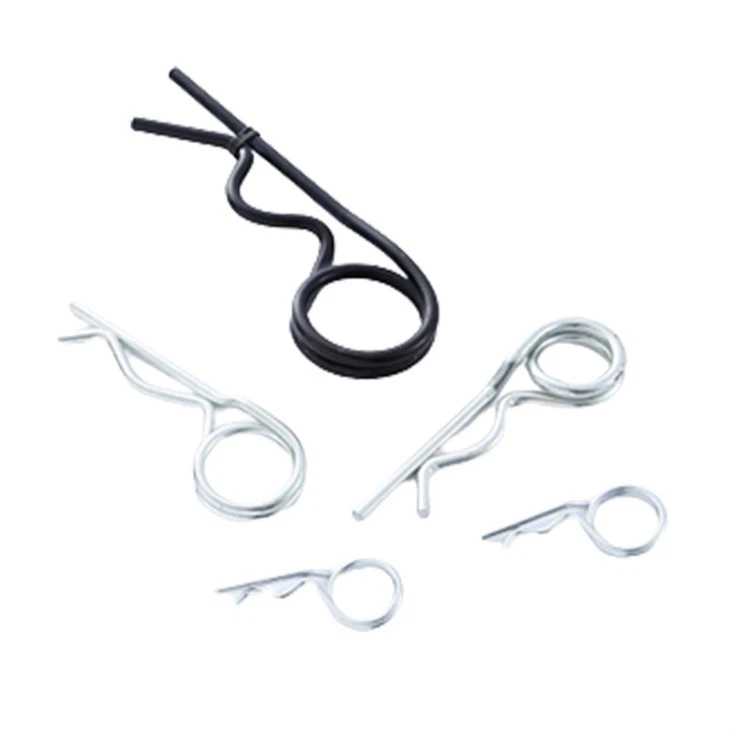
Advantages in Automotive Applications
Retention and Stability
One of the key requirements in automotive engineering is the ability to keep components securely in place. Spring pins' self - retaining nature makes them ideal for this purpose. For example, in engine components, where there are high - vibration environments, spring pins can hold gears, pulleys, and shafts firmly. The outward pressure they exert ensures that the connected parts do not loosen over time, reducing the risk of mechanical failure.
Ease of Installation and Removal
In an automotive manufacturing or maintenance setting, time is of the essence. Spring pins are relatively easy to install compared to some other fastening methods. They can be simply pressed into the appropriate holes, without the need for complex tools or extensive labor. In the same vein, when maintenance or repairs are needed, spring pins can be removed with relative ease, allowing for quick access to the components they are holding.
Cost - Effectiveness
Cost is always a major consideration in the automotive industry. Spring pins are generally more affordable than some other types of fasteners. Their lower cost combined with their long - lasting performance makes them a cost - effective solution for automotive applications. They can help reduce the overall manufacturing cost of vehicles without sacrificing quality or safety.
Specific Automotive Uses
Transmission Systems
In automotive transmission systems, precision and reliability are crucial. Spring pins can be used to secure various components within the transmission, such as synchronizer rings, shift forks, and gear clusters. The self - retaining feature of spring pins ensures that these components remain properly aligned and in place during the high - torque and high - speed operation of the transmission.
Suspension Systems
The suspension system of a vehicle is responsible for providing a smooth ride and handling. Spring pins can be used to attach control arms, ball joints, and other components in the suspension. Their ability to withstand repeated stress and vibration helps maintain the integrity of the suspension system, improving the overall safety and comfort of the vehicle.
Electrical and Electronic Components
Modern vehicles are equipped with a large number of electrical and electronic components. Spring pins can be used to secure connectors, switches, and circuit boards. They provide a reliable connection that can withstand vibrations and temperature changes, ensuring the proper functioning of the vehicle's electrical systems.
Challenges and Considerations
Material Compatibility
When using spring pins in automotive applications, material compatibility is a critical consideration. The pins need to be made of materials that can withstand the specific environmental conditions within the vehicle. For example, in areas exposed to high heat, such as the engine compartment, pins made of high - temperature - resistant materials like alloy steels may be required. In addition, the pins must not react with the materials of the components they are connecting to avoid corrosion or other forms of degradation.
Load Requirements
Automotive components are subjected to a wide range of loads, including static, dynamic, and impact loads. The spring pins used must be able to handle these loads without failing. This requires careful selection of the pin type, size, and material based on the specific load requirements of the application. For example, in high - load applications like drivetrain components, larger - diameter and stronger spring pins may be necessary.
Quality Assurance
As a spring pins supplier, we understand the importance of quality assurance in automotive applications. We adhere to strict quality control measures to ensure that our spring pins meet the highest industry standards. Our manufacturing processes are designed to produce pins with consistent dimensions, material properties, and performance characteristics. Before shipping, each batch of pins undergoes rigorous testing, including hardness testing, dimensional inspection, and fatigue testing.
Contact Us for Your Automotive Spring Pin Needs
If you are involved in the automotive industry and are considering using spring pins in your applications, we are here to help. Our team of experts can provide you with detailed technical advice on the selection of the right spring pins for your specific needs. We offer a wide range of spring pins, including the varieties mentioned above, at competitive prices.
Do not hesitate to reach out to us for a consultation. We are committed to providing you with high - quality spring pins that will meet the demanding requirements of the automotive industry. Whether you are a large - scale automotive manufacturer or a small - scale repair shop, we have the solutions for you.
References
- "Automotive Engineering Handbook" - A comprehensive guide on automotive design and manufacturing, which provides in - depth knowledge on fasteners and their applications in vehicles.
- "Fasteners in Automotive Applications" - A research paper that explores the different types of fasteners used in the automotive industry and their performance characteristics.
