

As a provider of Rotary Spline products, I often receive inquiries from customers about how to enhance the torque transmission efficiency of these essential mechanical components. In this blog post, I'll share some practical insights and strategies based on our years of experience in the industry.
Understanding Rotary Spline and Torque Transmission
Before delving into the methods to improve torque transmission efficiency, it's crucial to understand what a Rotary Spline is and how torque transmission works within it. A Rotary Spline is a mechanical device that combines linear and rotational motion. It consists of a spline shaft and a spline nut, with balls or rollers in between to facilitate smooth movement. Torque transmission refers to the ability of the Rotary Spline to transfer rotational force from one part to another.
The efficiency of torque transmission is influenced by several factors, including the design of the spline, the quality of materials used, the lubrication, and the operating conditions. By optimizing these factors, we can significantly improve the performance of the Rotary Spline.
Optimizing the Design of Rotary Spline
The design of the Rotary Spline plays a vital role in torque transmission efficiency. Here are some key design considerations:
Tooth Profile
The tooth profile of the spline shaft and nut affects the contact area and the distribution of forces. A well-designed tooth profile can increase the contact area, reducing the stress concentration and improving the torque transmission efficiency. For example, a modified involute tooth profile can provide better contact characteristics compared to a standard involute profile.
Number of Teeth
The number of teeth on the spline shaft and nut also impacts the torque transmission. Generally, a larger number of teeth can increase the contact area and distribute the load more evenly, resulting in higher efficiency. However, increasing the number of teeth may also increase the manufacturing complexity and cost. Therefore, a balance needs to be struck between the number of teeth and the overall design requirements.
Clearance and Preload
Proper clearance and preload are essential for optimal torque transmission. Clearance refers to the space between the spline shaft and nut, while preload is the initial force applied to the spline to eliminate the clearance. A small clearance can reduce the backlash and improve the accuracy of motion, but it may also increase the friction and wear. On the other hand, a proper preload can ensure a tight fit between the spline components, enhancing the torque transmission efficiency.
Selecting High - Quality Materials
The choice of materials for the Rotary Spline has a significant impact on its torque transmission efficiency and durability. Here are some important material considerations:
Hardness and Strength
The spline shaft and nut should be made of materials with high hardness and strength to withstand the high stresses during torque transmission. Common materials include alloy steels, such as chromium - molybdenum steel, which offer excellent mechanical properties. Heat treatment processes, such as quenching and tempering, can further enhance the hardness and strength of the materials.
Surface Finish
A smooth surface finish can reduce the friction between the spline components, improving the torque transmission efficiency. Precision machining processes, such as grinding and honing, can be used to achieve a high - quality surface finish. Additionally, surface treatments, such as nitriding or coating, can enhance the wear resistance and reduce the coefficient of friction.
Ensuring Proper Lubrication
Lubrication is crucial for reducing friction and wear in the Rotary Spline, thereby improving the torque transmission efficiency. Here are some lubrication tips:
Lubricant Selection
The choice of lubricant depends on the operating conditions, such as the speed, load, and temperature. For high - speed applications, a low - viscosity lubricant may be preferred to reduce the frictional losses. For high - load applications, a high - viscosity lubricant with good anti - wear properties is recommended. Grease is also a popular choice for lubricating Rotary Splines, as it can provide long - term lubrication and protection.
Lubrication Method
Proper lubrication method is essential to ensure that the lubricant reaches all the critical areas of the spline. For example, in some applications, a centralized lubrication system can be used to supply the lubricant continuously. In other cases, manual lubrication at regular intervals may be sufficient.
Controlling Operating Conditions
The operating conditions of the Rotary Spline can also affect its torque transmission efficiency. Here are some factors to consider:

Speed and Load
The speed and load of the Rotary Spline should be within its design limits. Operating the spline at excessive speeds or loads can increase the friction, wear, and heat generation, leading to a decrease in torque transmission efficiency. Therefore, it's important to select the appropriate Rotary Spline based on the application requirements and to avoid overloading.
Temperature and Humidity
High temperatures and humidity can affect the performance of the lubricant and the materials of the spline. For example, high temperatures can cause the lubricant to degrade, while high humidity can lead to corrosion. Therefore, it's important to control the operating environment and to take appropriate measures, such as using heat - resistant lubricants and corrosion - resistant materials.
Our Rotary Spline Products
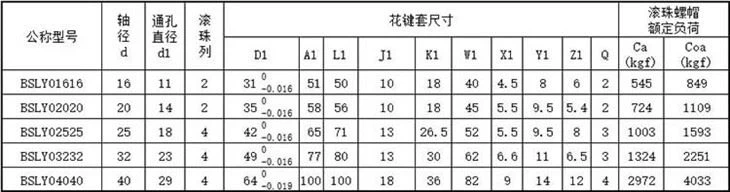
At our company, we offer a wide range of Rotary Spline products, including Bsly Rotary Ball Spline, Bssy Rotary Ball Spline, and Bfsy Rotary Ball Spline. These products are designed with high - precision manufacturing techniques and high - quality materials to ensure optimal torque transmission efficiency.
Our Bsly Rotary Ball Spline features a unique design that provides smooth and accurate linear and rotational motion. It is suitable for a variety of applications, such as industrial robots, machine tools, and automation equipment. The Bssy Rotary Ball Spline offers high load - carrying capacity and excellent torque transmission performance, making it ideal for heavy - duty applications. The Bfsy Rotary Ball Spline is designed for high - speed applications, with low friction and high efficiency.
Contact Us for Purchasing and Consultation
If you are interested in improving the torque transmission efficiency of your Rotary Spline or are looking for high - quality Rotary Spline products, please feel free to contact us. Our team of experts is ready to provide you with professional advice and solutions tailored to your specific needs. Whether you have questions about product selection, installation, or maintenance, we are here to help. Let's work together to enhance the performance of your mechanical systems.
References
- "Mechanical Design Handbook", by Joseph E. Shigley and Charles R. Mischke.
- "Fundamentals of Machine Elements", by J.E. Shigley, C.R. Mischke, and R.G. Budynas.
- Technical literature from leading Rotary Spline manufacturers.
