

Hey there! I'm a supplier of linear guides, and I'm super stoked to share with you all about what a linear guide is.
So, what exactly is a linear guide? Well, in simple terms, a linear guide is a device that helps in guiding and supporting linear motion. It's like the trusty sidekick that ensures smooth and precise movement in all sorts of applications. Whether it's in industrial machinery, automation systems, or even in some high - tech consumer products, linear guides play a crucial role.
Let's start by understanding the basic components of a linear guide. Typically, a linear guide consists of a rail and a block. The rail is the long, straight part that is fixed to the base structure. It's like the road that the block will travel on. The block, on the other hand, is the part that moves along the rail. It has built - in rolling elements or sliding surfaces that interact with the rail to enable smooth motion.
There are different types of linear guides, and each has its own unique features and benefits. One of the most common types is the Roller Guideways. Roller guideways use rollers as the rolling elements between the block and the rail. These rollers can distribute the load evenly, which means they can handle higher loads compared to some other types of guides. They also offer high stiffness and low friction, which results in smooth and efficient motion. This makes them a great choice for applications where high precision and heavy - duty performance are required, like in large - scale manufacturing machines.
Another type is the Motion Linear Guide. Motion linear guides are designed to provide precise and reliable linear motion. They often come with advanced features such as pre - loading mechanisms. Pre - loading helps to eliminate any play or backlash in the system, ensuring that the movement is as accurate as possible. These guides are commonly used in applications where accuracy is of the utmost importance, like in semiconductor manufacturing equipment or in some medical devices.
Then we have the Sliding Guideways. Sliding guideways work on the principle of sliding contact between the block and the rail. They are relatively simple in design and can be a cost - effective solution for some applications. They are suitable for applications where the motion speed is relatively low and the load is not extremely high. For example, in some small - scale DIY projects or in older - style machinery where budget is a major concern, sliding guideways can be a good option.
Now, let's talk about why linear guides are so important in various industries. In the manufacturing industry, linear guides are essential for the operation of CNC machines. These machines need to move with high precision to cut, drill, and shape materials accurately. Without linear guides, it would be almost impossible to achieve the level of precision required for mass - producing high - quality products.
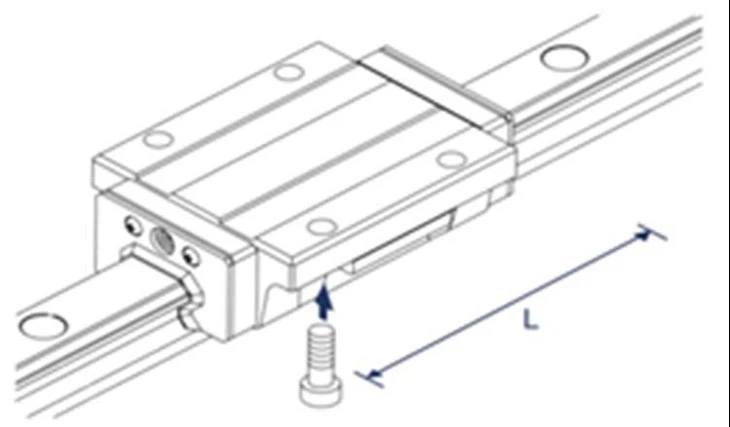
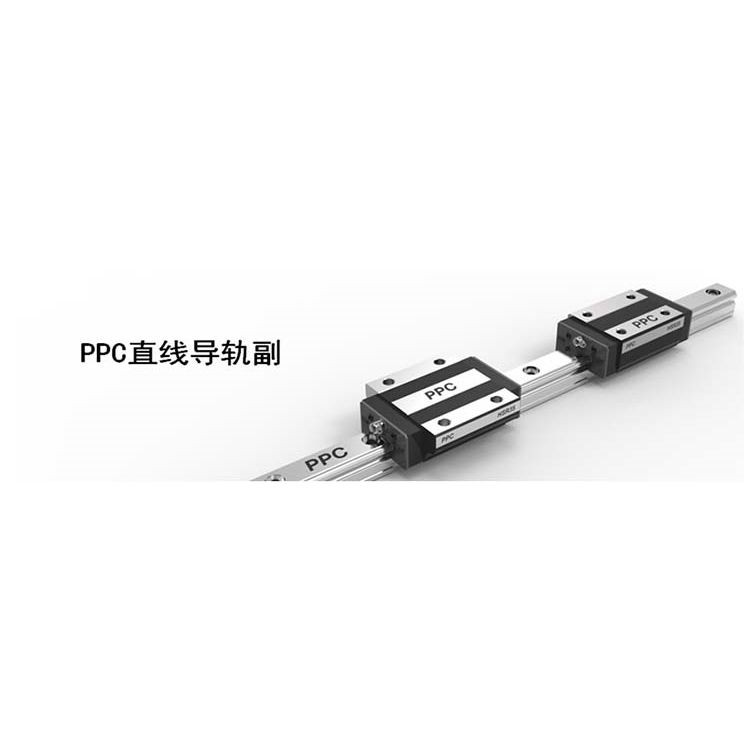
In the automation industry, linear guides are used in robotic arms and conveyor systems. Robotic arms need to move smoothly and precisely to perform tasks such as picking and placing objects. Linear guides help these robotic arms to move in a controlled manner, increasing the efficiency and reliability of the entire automation process. Conveyor systems also rely on linear guides to ensure that the products are transported smoothly from one point to another.
In the aerospace industry, linear guides are used in aircraft components. For example, in the landing gear system, linear guides help to ensure that the landing gear can extend and retract smoothly and safely. In satellite technology, linear guides are used to adjust the position of various components, which is crucial for the proper functioning of the satellite.
When it comes to choosing the right linear guide for your application, there are several factors to consider. First of all, you need to think about the load capacity. How much weight will the guide need to support? If you're dealing with heavy loads, then a roller guideway might be the best choice. But if the load is relatively light, a sliding guideway could be sufficient.
The speed of the motion is another important factor. If your application requires high - speed movement, you'll need a linear guide that can handle it. Motion linear guides are often a good option for high - speed applications because they are designed to minimize friction and provide smooth motion at high velocities.
Accuracy is also a key consideration. For applications where precision is critical, like in medical imaging equipment or in optical devices, you'll want a linear guide with high accuracy and low backlash.
As a linear guide supplier, I know how important it is to provide high - quality products. We source our materials from the best suppliers and use advanced manufacturing techniques to ensure that our linear guides meet the highest standards. Our team of experts is always ready to help you choose the right guide for your specific needs.
If you're in the market for linear guides, whether it's for a small - scale project or a large - scale industrial application, I'd love to hear from you. We offer a wide range of linear guides, including roller guideways, motion linear guides, and sliding guideways. Our prices are competitive, and we can provide you with excellent after - sales service.
So, if you're interested in learning more about our products or want to discuss your specific requirements, don't hesitate to reach out. You can start a conversation with us to get more information and to start the procurement process. We're here to make sure you get the best linear guide solution for your needs.
References
- "Industrial Linear Motion Technology" by various industry experts
- "Handbook of Linear Motion Systems"
