

Hey there! As a hose clamps supplier, I've been getting a bunch of questions lately about the installation angle requirements for hose clamps. So, I thought I'd take a moment to break it down for you all.
First off, why does the installation angle even matter? Well, it's all about ensuring a proper and secure connection between the hose and the fitting. If the hose clamp isn't installed at the right angle, it might not provide enough pressure around the hose, leading to leaks. And trust me, leaks can cause all sorts of headaches, from minor annoyances to major system failures.
Let's start with the basics. In most cases, the ideal installation angle for hose clamps is as close to 90 degrees as possible. When the clamp is perpendicular to the hose, it distributes the clamping force evenly around the circumference of the hose. This even distribution is crucial because it helps to prevent the hose from getting pinched on one side and not getting enough pressure on the other.
Think of it like trying to hold a water balloon. If you squeeze it unevenly, the water is going to squirt out from the weaker side. The same principle applies to hose clamps. When the force is evenly distributed, the seal is much more reliable.
Now, I know that in real - world situations, it's not always easy to get that perfect 90 - degree angle. Sometimes, the space is tight, or the fittings are in an awkward position. In those cases, you should aim to keep the angle within a reasonable range. A deviation of up to 15 degrees from the perpendicular is generally acceptable, but any more than that, and you're starting to risk a less - than - optimal seal.
Another factor to consider is the type of hose clamp you're using. There are different kinds out there, like worm - drive clamps, constant - tension clamps, and spring - loaded clamps. Each type might have slightly different requirements when it comes to the installation angle.
Worm - drive clamps are probably the most common type. They're easy to install and adjust. For these clamps, the 90 - degree rule still holds true. Make sure the screw part of the clamp is perpendicular to the hose. This allows you to tighten the clamp evenly and get a good grip on the hose.

Constant - tension clamps, on the other hand, are designed to maintain a consistent level of pressure. They're often used in applications where the temperature and pressure can vary. When installing these clamps, you still want to aim for that 90 - degree angle, but they can be a bit more forgiving if you can't get it exactly right. That's because they're engineered to adapt to some degree of misalignment.
Spring - loaded clamps are great for quick installations. They rely on the spring force to hold the hose in place. For these clamps, it's important to make sure that the spring is properly seated and that the clamp is at a close - to - perpendicular angle. If the spring isn't sitting right because of a bad installation angle, it might not provide enough force to keep the hose secure.
Let's talk about the impact of an incorrect installation angle. If the angle is too far off, the clamp might not be able to fully tighten around the hose. This can result in a loose connection, which can lead to leaks. Leaks can cause fluid loss, which is not only wasteful but can also damage other components in the system. For example, in a coolant system, a leak can cause the engine to overheat, leading to costly repairs.
Moreover, an improper installation angle can also cause premature wear on the hose. When the clamp is not applying the force evenly, it can create stress points on the hose. Over time, these stress points can cause the hose to crack or split, further compromising the integrity of the system.
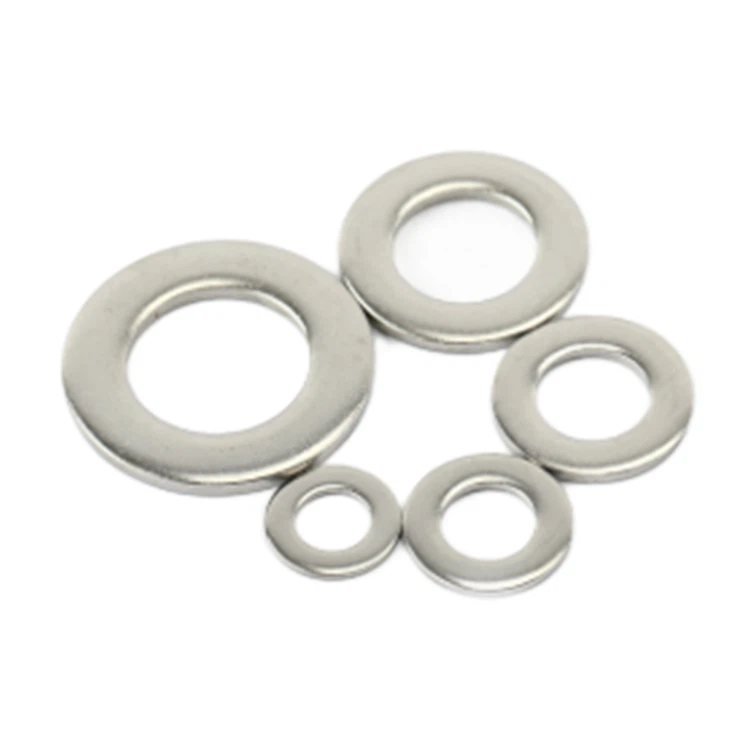
Now, I want to mention a few related products that can be used in conjunction with hose clamps. For instance, washers can play an important role in ensuring a good seal. You might want to check out Din127 8mm Spring Washers and Din125 Plain Steel Washers. These washers can help distribute the clamping force more evenly and prevent the clamp from digging into the hose.
Another useful product is the Din6799 Locking Circlip. It can be used in some applications to provide an extra level of security and ensure that the clamp stays in place.
So, how do you ensure that you're getting the right installation angle? Well, it starts with proper planning. Before you start installing the hose clamp, take a look at the space and the fittings. Try to visualize how the clamp is going to fit and make any necessary adjustments to the position of the hose or the fittings. You can also use tools like a protractor to check the angle if you're really concerned about getting it right.
In conclusion, the installation angle of hose clamps is a crucial factor in ensuring a reliable and leak - free connection. Aim for a 90 - degree angle whenever possible, and keep any deviations within 15 degrees. Different types of clamps might have slightly different requirements, but the general principle remains the same.
If you're in the market for high - quality hose clamps or any of the related products I mentioned, we're here to help. Whether you're a DIY enthusiast working on a home project or a professional in an industrial setting, we've got the products you need. Don't hesitate to reach out for more information or to start a procurement discussion. We're ready to assist you in finding the perfect solutions for your needs.
References:
- "Hose Clamps: A Practical Guide" by Industrial Fittings Magazine
- "Installation Best Practices for Fluid Transfer Systems" by Fluid Dynamics Journal
