

Hey there! As a supplier of Hose Clamps, I often get asked a bunch of questions about the products we offer. One question that pops up quite a bit is, "Can hose clamps be used on braided hoses?" Well, let's dive right into this topic and break it down.
First off, let's understand what braided hoses are. Braided hoses are pretty cool. They're made by weaving together materials like stainless - steel wire, nylon, or other strong fibers around a flexible inner tube. This braiding gives the hose extra strength and durability, making it suitable for high - pressure applications. You'll often find braided hoses in automotive, industrial, and even some home plumbing systems.
Now, let's talk about hose clamps. Hose clamps are simple yet essential tools. They're used to secure hoses to fittings, preventing leaks and ensuring a tight connection. There are different types of hose clamps out there, like worm gear clamps, constant tension clamps, and screw - type clamps. Each type has its own unique features and is designed for specific applications.
So, can you use hose clamps on braided hoses? The short answer is yes, you can. But there are some important things to keep in mind.

One of the main concerns when using hose clamps on braided hoses is the risk of damaging the braid. The braided material can be quite delicate in some cases, and if the clamp is tightened too much, it can cut into the braid, weakening the hose and potentially causing leaks. To avoid this, you need to choose the right type of hose clamp.
Worm gear clamps are a popular choice for braided hoses. They're adjustable, which means you can carefully control the amount of pressure you apply. When using a worm gear clamp, start by loosening the screw so that the clamp can fit around the hose and the fitting. Then, place the clamp over the hose where it meets the fitting. Slowly tighten the screw, but don't go overboard. You want to apply just enough pressure to create a seal without damaging the braid.
Constant tension clamps are another option. These clamps are designed to apply a consistent amount of pressure, which can be great for braided hoses. They're pre - set to a specific tension, so you don't have to worry about over - tightening. However, they might be a bit more expensive than worm gear clamps.
Now, let's talk about the importance of using the right size of hose clamp. If the clamp is too small, it won't fit properly around the hose and the fitting, and you won't be able to create a good seal. On the other hand, if the clamp is too large, it won't apply enough pressure, and you might end up with a leak. Make sure to measure the outside diameter of the hose accurately before choosing a clamp.
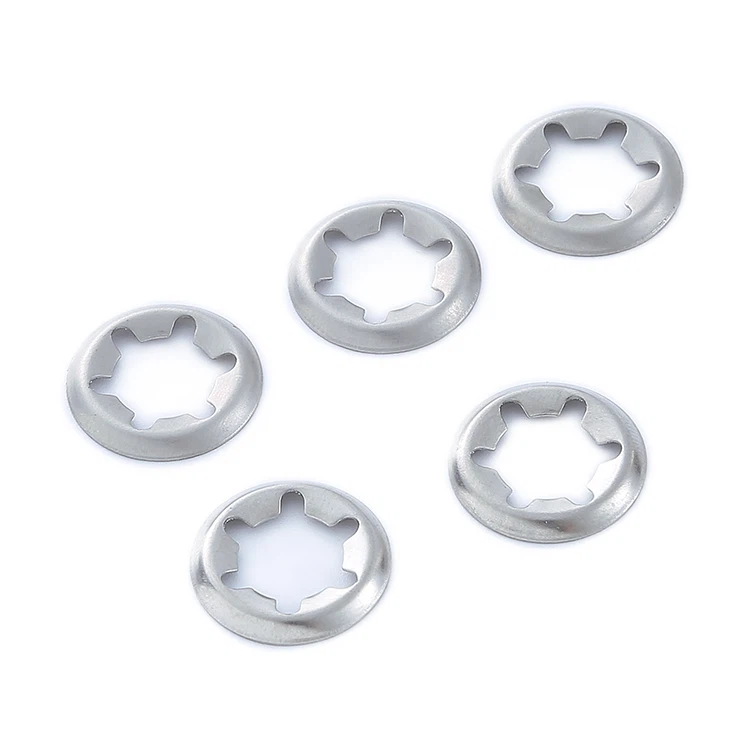
In addition to choosing the right type and size of hose clamp, it's also a good idea to use some accessories to protect the braided hose. For example, Din6319c Sphere Washer can be placed between the clamp and the hose. These washers can distribute the pressure evenly, reducing the risk of damage to the braid.
Another useful accessory is Din127 8mm Spring Washers. Spring washers can help maintain the tension on the clamp over time, especially in applications where there's a lot of vibration.
When installing a hose clamp on a braided hose, it's important to follow the proper procedure. First, clean the hose and the fitting to remove any dirt or debris. This will ensure a better seal. Then, place the clamp around the hose and position it over the fitting. If you're using a worm gear clamp, use a screwdriver to tighten the screw slowly. Check the tightness periodically as you go.
Once the clamp is tightened, give it a quick inspection. Make sure the hose is seated properly on the fitting and that there are no signs of damage to the braid. If everything looks good, you're ready to go.
It's also important to consider the environment in which the braided hose and clamp will be used. If the application involves high temperatures, chemicals, or extreme pressures, you need to choose a hose clamp that can withstand these conditions. For example, some hose clamps are made from stainless steel, which is resistant to corrosion and can handle high temperatures.
In some cases, you might need to replace the hose clamp over time. This could be due to wear and tear, or if the clamp has been damaged. Regular maintenance and inspection of the hose and clamp can help you catch any issues early and prevent leaks or other problems.
As a Hose Clamps supplier, I've seen firsthand the importance of using the right products for the job. That's why we offer a wide range of Hose Clamps to suit different applications and requirements. Whether you're working on a small home project or a large industrial application, we've got you covered.
If you're in the market for hose clamps for your braided hoses, or if you have any questions about which type of clamp is right for you, don't hesitate to reach out. We're here to help you make the best choice and ensure that your hoses are properly secured.
In conclusion, using hose clamps on braided hoses is definitely possible, but it requires careful consideration of the type of clamp, the size, and the installation process. By following the tips and guidelines I've shared, you can ensure a safe and reliable connection. So, go ahead and get the job done with confidence, knowing that you're using the right products.
References:
- Industry standards and guidelines for hose and clamp applications
- Product manuals and specifications from leading manufacturers
