

Hey there! As a supplier of ball and screw products, I've seen my fair share of worn - out ball and screws over the years. In this blog, I'm gonna share with you the signs that your ball and screw might be on their last legs.
First off, let's talk about what ball and screws are and why they're so important. Ball screws are mechanical linear actuators that translate rotational motion into linear motion with high efficiency. They're used in a wide range of applications, from CNC machines to robotics and aerospace. A worn - out ball and screw can lead to all sorts of problems, like reduced accuracy, increased vibration, and even system failure. So, it's crucial to spot the signs early.
Unusual Noise
One of the most obvious signs of a worn - out ball and screw is unusual noise. If you start hearing a grinding, clicking, or rattling sound when the ball screw is in operation, that's a red flag. This noise can be caused by a few different things. For example, if the balls inside the screw are starting to wear down, they won't roll as smoothly as they should. This can create friction and result in that annoying grinding noise.
Another possible cause of noise is misalignment. When the ball screw isn't properly aligned, the balls can hit the raceways at odd angles, causing a clicking sound. And if there's a lot of play in the system, you might hear a rattling noise as the components move around.
Increased Vibration
Along with noise, increased vibration is a tell - tale sign of a worn ball and screw. You might notice that the machine or equipment using the ball screw is shaking more than usual. This vibration can be felt not only in the machine itself but also in the surrounding area.
Excessive vibration is often due to wear and tear on the balls and raceways. As the surfaces of the balls and raceways get worn, the smooth motion of the ball screw is disrupted. This leads to uneven forces being applied, which in turn causes the vibration. Vibration can also be a result of loose components or improper lubrication.
Reduced Accuracy
Accuracy is key when it comes to ball screws. If you're starting to notice that the linear motion controlled by the ball screw isn't as precise as it used to be, it could be a sign of wear. For instance, in a CNC machine, if the cutting tool isn't reaching the exact position it's supposed to, or if there are errors in the dimensions of the machined parts, the ball screw might be to blame.
Worn balls and raceways can cause the ball screw to have more play, which means that the linear motion won't be as controlled. This can lead to inaccuracies in positioning and can affect the quality of the final product.
Backlash
Backlash is another important indicator of a worn - out ball and screw. Backlash refers to the amount of play or clearance between the ball nut and the screw. A small amount of backlash is normal, but if it increases over time, it's a sign of wear.
When the balls and raceways wear down, the fit between the ball nut and the screw becomes looser. This allows for more movement in the opposite direction when the direction of motion is reversed. Excessive backlash can lead to problems like poor positioning accuracy and reduced repeatability.
Difficulty in Operation
If you find that it's becoming harder to operate the equipment that uses the ball screw, that's a sign that something's wrong. For example, if you have to apply more force to turn the screw or if the motion is jerky rather than smooth, it could be due to wear.
This difficulty in operation can be caused by several factors. Worn balls might not roll as easily, which increases the friction in the system. Also, if there's debris or dirt in the ball screw, it can cause the balls to get stuck and make the operation more difficult.
Visual Inspection
Sometimes, you can tell that a ball and screw is worn just by looking at it. Check the balls and the raceways for signs of wear, such as pitting, scoring, or discoloration. Pitting looks like small holes on the surface, which can be caused by the repeated impact of the balls. Scoring is a more severe form of wear, where there are deep scratches on the raceways.
Discoloration can also indicate problems. If the balls or raceways are turning a different color, it could be due to overheating caused by excessive friction. You should also check for any signs of damage, like cracks or chips in the components.
Lubrication Issues
Proper lubrication is essential for the smooth operation of a ball and screw. If you notice that the lubricant is dirty, has a strange smell, or is leaking, it could be a sign of a problem. Dirty lubricant can contain debris that can cause wear on the balls and raceways.
A strange smell in the lubricant might indicate that it's breaking down due to high temperatures or contamination. And if there's a lubricant leak, it means that the seals aren't working properly, which can lead to the entry of dirt and moisture into the ball screw.
Excessive Heat
Overheating is a serious sign of a worn - out ball and screw. If the ball screw gets too hot during operation, it can cause the materials to expand and warp, which further accelerates the wear process. You can usually tell if the ball screw is overheating by touching it (but be careful not to burn yourself!). If it's too hot to touch, there's definitely a problem.
Excessive heat can be caused by a number of factors, including lack of lubrication, misalignment, or excessive load. When the friction in the system is too high, it generates heat. And if this heat isn't dissipated properly, it can cause damage to the ball screw.
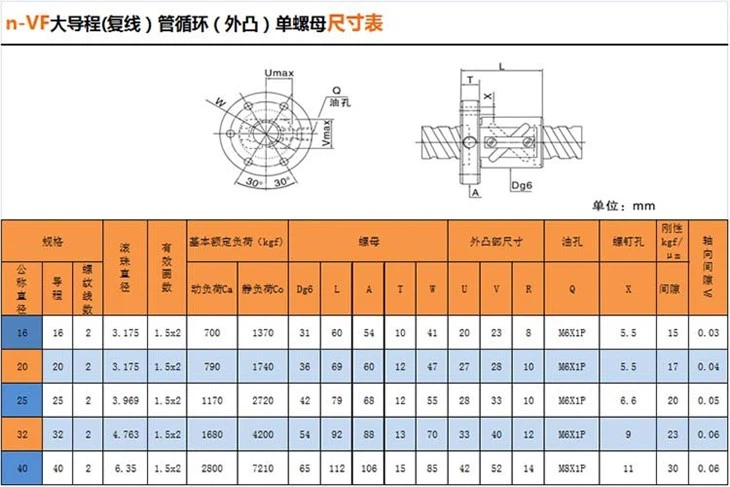
Solutions and Replacement
If you've noticed any of these signs in your ball and screw, it's important to take action. In some cases, minor issues can be fixed by adjusting the alignment, cleaning the components, or changing the lubricant. However, if the wear is severe, you might need to replace the ball and screw.
As a ball and screw supplier, I offer a wide range of products to meet your needs. Whether you're looking for a Custom Ball Screw, a Ball Screw Set, or a Low Cost Ball Screw, I've got you covered.

If you're experiencing problems with your ball and screw or if you're just looking to upgrade your existing system, don't hesitate to reach out. I can help you find the right solution and ensure that your equipment runs smoothly and efficiently.
Conclusion
In conclusion, being able to recognize the signs of a worn - out ball and screw is crucial for maintaining the performance and longevity of your equipment. By paying attention to things like noise, vibration, accuracy, and lubrication, you can catch problems early and take the necessary steps to fix them.
If you have any questions or need more information about ball and screws, feel free to contact me. I'm always here to help you with your ball and screw needs. So, keep an eye on those signs and make sure your ball and screw are in top shape!
References
- "Ball Screw Handbook" - A comprehensive guide on ball screw technology and maintenance.
- Industry whitepapers on linear motion systems and ball screw applications.
